

The "patch and repair" cycle is incredibly common in general dentistry: You visit the dentist for a routine checkup, and let’s say a small spot of tooth decay is found. The solution is a standard dental filling, a procedure that takes less than an hour and restores the tooth to its original appearance.
However, as the years go by, that same tooth may develop another cavity around the edges of the old filling, or the filling itself might chip. Often, a patient ends up patching the same tooth repeatedly over a decade or two.
But there comes a point where a tooth simply outgrows what a filling can fix. When the structural integrity of the tooth is compromised by the size of the repair, continuing to place fillings is like putting a small band-aid on a deep wound:
So, when is a filling not enough?
Dental crowns have now entered the chat. Hearing that you need a crown can feel like a major escalation, but crowns are simply protective restorations. A crown is a long-term investment in the survival of your natural tooth, designed to stop the cycle of damage and provide a permanent shield against the pressures of daily use.
How Fillings Work and Their Limits
As far as crowns vs fillings, the difference lies in how each restoration interacts with your tooth. A dental filling is an intracoronal restoration, meaning the material (composite resin or silver amalgam) is placed inside the walls of your natural tooth.
Fillings are perfectly designed to support small areas of damage, filling the void and sealing it against bacteria. However, fillings do not provide structural strength to the tooth and, in fact, rely on the surrounding tooth structure to hold them in place.
So, why do large or repeated fillings weaken the tooth? Imagine a hollowed-out log: If you fill a small hole in that log with cement, the log remains strong. But if you hollow out 60% or 70% of that log and fill it with cement, the remaining wood is much more likely to split under pressure.
In the mouth, this pressure comes from chewing, which can exert hundreds of pounds of force, and forms cracks around old restorations. The filling material expands and contracts at a different rate than your natural tooth, eventually causing micro-fractures in the weakened enamel.
6 Warning Signs a Crown May Be Needed
How do you know when it’s time to stop patching and start protecting? Here are the primary signs that you should be looking for:
- Pain When Chewing
If you experience a sharp, sudden pain when biting down, it often indicates what we call "cracked tooth syndrome." This happens when the walls of a tooth are flexing around a large filling and usually requires a dental crown.
- Lingering Sensitivity
While occasional sensitivity to cold is common, prolonged sensitivity to heat or pressure suggests the internal pulp is under stress due to a failing restoration.
- A Filling That Keeps Breaking or Falling Out
If you’ve had the same filling replaced twice in three years, the tooth structure is telling you it can no longer support the material.
- Visible Cracks in the Tooth
Using a dental mirror or feeling with your tongue, you might notice craze lines or a visible fracture line running across the biting surface.
- Dark Coloration Around an Old Filling
This is often a sign of leakage, meaning bacteria is getting under the filling and causing hidden tooth decay inside the tooth.
- Tooth Feels Weak or Unstable
Sometimes, a tooth just feels off when you eat. This instability is often a precursor to a major break!
Also Read: Pros and Cons of Dental Crowns
What Happens If You Keep Replacing Fillings?
The temptation to choose a filling over a crown usually stems from cost or time concerns, but foregoing a filling when you need one can lead to much more expensive problems.
Every time a filling is replaced, more healthy tooth structure is lost to the drill. This leads to a significantly higher risk of fractures.
If a tooth fractures deeply, especially if the crack extends below the gum line, it may become non-restorable. In these cases, the tooth must be extracted and replaced with a dental implant, which is far more invasive and costly than a crown.
Furthermore, large, failing fillings often irritate the nerve. By the time a patient realizes the filling isn't enough, the decay or the fracture may have already reached the pulp, necessitating a root canal. In many cases, getting a crown early can actually prevent the need for a root canal by stabilizing the tooth and sealing out bacteria.
How Does a Crown Protect the Tooth?
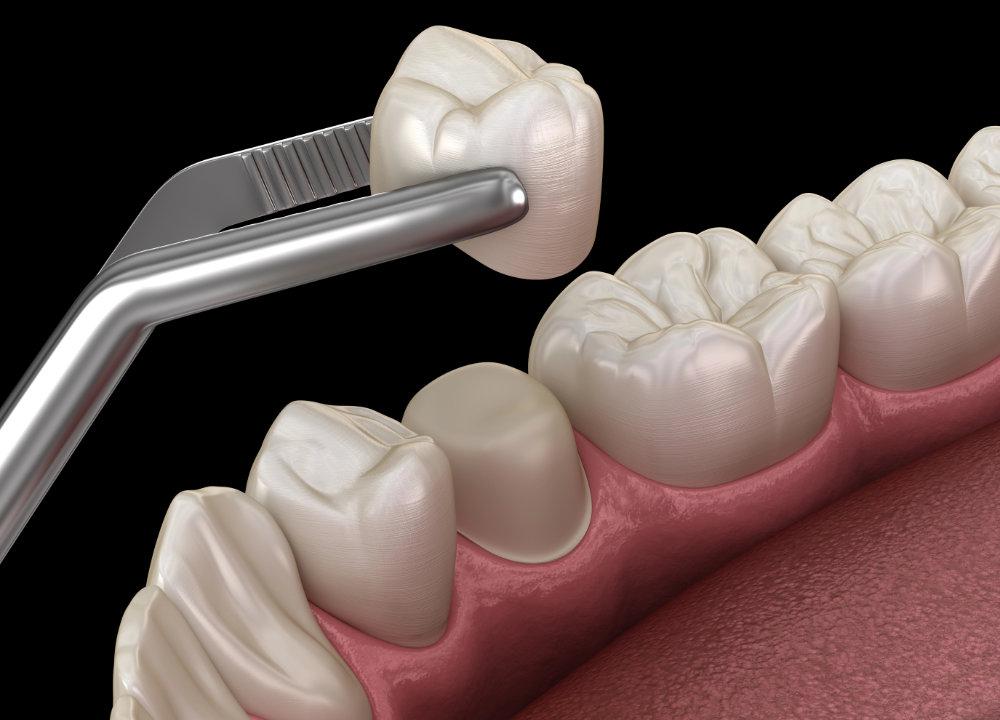
Unlike a filling, a dental crown is an extracoronal restoration. It covers the entire visible portion of the tooth, acting like a protective helmet or cap. Here’s how it protects your tooth:
● Restores Strength and Function: Because it encases the tooth, it holds the remaining structure together, preventing the walls from flexing or splitting.
● Seals Out Bacteria: A crown provides a 360-degree seal that is far more effective at preventing recurrent decay than a filling.
● Prevents Cracks from Spreading: If a crack is already present, a crown stops it from migrating deeper into the root.
● Extends the Life of the Natural Tooth: A well-placed crown can allow a tooth that would otherwise be lost to function comfortably for decades.
How Dentists Decide: Crown vs Filling
The choice of crown vs. filling for a damaged tooth is based on several clinical factors determined during an exam. Dentists examine the interproximal (between-the-teeth) spaces and the depth of existing decay using X-rays.
The general rule of thumb is that if more than 50% of the tooth's width is compromised, a crown is necessary. Location of the tooth also matters; for example, molars, which handle the most bite force, are more likely to require crowns than front teeth.
If you are a clencher or grinder, a filling will almost certainly fail on a weakened tooth, making a crown the only logical choice. And a tooth that has already undergone a root canal or has had multiple large fillings is a prime candidate for a crown.
What the Crown Process Looks Like
If you're wondering how to tell if you need a crown, the first step is a consultation. If a crown is recommended, the process usually follows these steps:
- Exam and Imaging: High-resolution X-rays and, if needed, a 3D scan are used to map the tooth.
- Tooth Preparation: The dentist removes the old filling and decay, then reshapes the tooth so the crown can fit snugly over it.
- Temporary Crown: While a laboratory crafts your custom permanent crown, you will wear a temporary one to protect the prepared tooth.
- Final Placement: Once the permanent crown arrives, the dentist checks the fit, bite, and color before permanently bonding it in place.
Also Read: Crowns vs. Veneers vs. Bridges: Which Dental Solution Is Right for You?
Cracked Tooth Treatment in Woodland Hills
Ignoring a weakened tooth is a gamble because the stakes are your smile and your wallet. If you are experiencing recurring pain, sensitivity, or a filling that just won't stay put, don't wait for the tooth to break completely!
When a crown is better than a filling, it is an investment in your future comfort. We invite you to protect your oral health by scheduling a comprehensive exam today. Let’s determine the best way to reinforce your weakened tooth and ensure it stays healthy and functional for a lifetime!
Book your appointment online with Woodland Hills Dental Care today.