
What Patients Wish They Knew Before Replacing Missing Teeth
When you lose a tooth, the biggest concern is the unsightly gap in your smile or the awkwardness of chewing on one side. But as any experienced implant dentist in Woodland Hills will tell you, a missing tooth is a bit like a missing brick in a foundation.
That is, eventually, the structures around it start to lean, shift, and weaken, potentially changing the entire architecture of your teeth.
Yes, replacing missing teeth can help you maintain your selfie-ready grin, but doing so also provides a positive fundamental shift in your oral health.
We find that many of our patients at Woodland Hills Dental Care approach dental implant surgery with a mix of excitement and some understandable white-knuckle nerves. This guide is designed to pull back the curtain on restorative dentistry and explain what you need to know before taking the plunge.
Why Replacing Matters More Than Many Patients Realize
Most people think of missing teeth treatment as a cosmetic fix. Although looking good is obviously a great perk, the biological under-the-hood benefits are the real heroes here. That’s because when a tooth is lost, the silent consequences begin almost immediately, including:
- Jawbone Health: Your jawbone needs the stimulation of chewing to stay dense. Without a tooth root, the bone begins to resorb or shrink. This can eventually lead to a sunken facial appearance.
- Surrounding Teeth Shifting: Teeth like to have neighbors. When a gap appears, surrounding teeth begin to drift or tilt into the empty space, which can ruin your bite and lead to jaw pain or TMJ issues.
- Speech Clarity: Try saying "thistle" or "sixty-six" without your front teeth (it’s not easy). Teeth play a vital role in phonetics, and missing teeth can compromise your speech.
- Chewing Function: If you’re avoiding your favorite steak or crunchy apple because of a gap, your nutrition and quality of life are already taking a hit.
Despite these risks, many patients delay treatment because they’re unsure of the process or have heard outdated horror stories. Keep reading while we clear the air.
What Dental Implants Actually Are
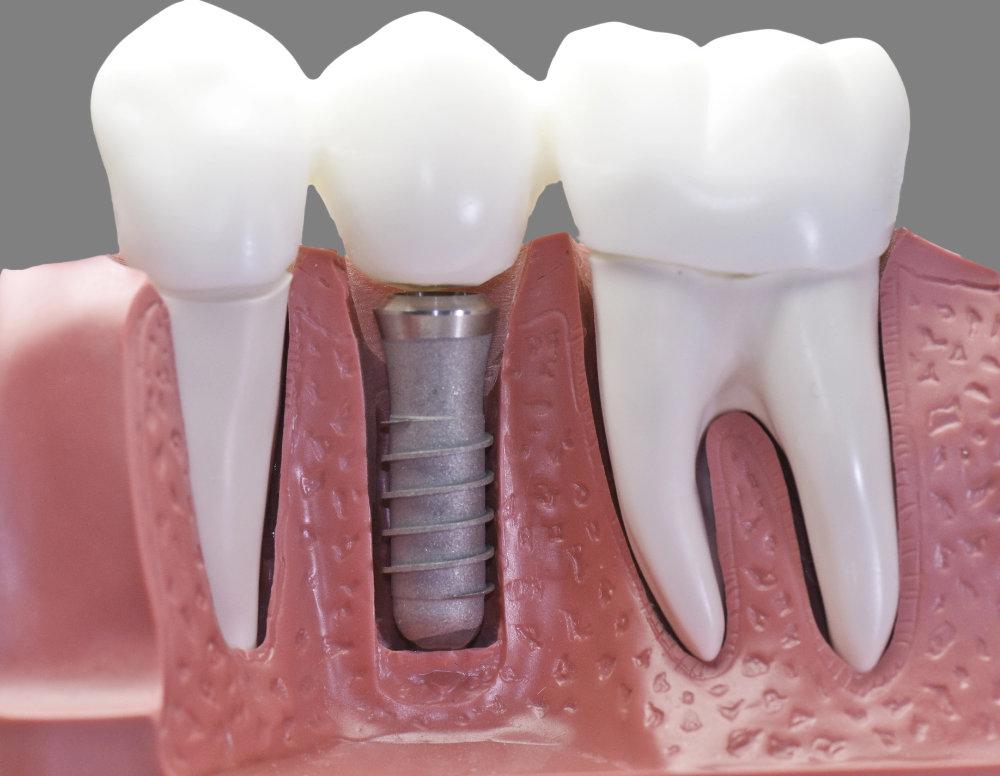
Think of a dental implant not as a fake tooth, but as a high-tech replacement for a tooth root. An implant consists of three main parts:
- Implant Post: A small screw made of biocompatible titanium that is surgically placed into your jawbone.
- Abutment: A connector piece that sits on top of the post.
- Restoration: The visible part is a custom-made crown, bridge, or denture that looks exactly like your natural teeth.
Unlike dentures, which sit on top of the gums, implants are designed for permanent tooth replacement. Through a biological process called osseointegration, your jawbone actually grows around and fuses with the titanium post. Once healed, your dental implant’s not going anywhere.
Also Read: A Guide to Implant-Supported Bridges
What Patients Often Don’t Realize Before Getting Dental Implants
If you’re looking for dental implants for missing teeth in Woodland Hills, you need to go in with your eyes wide open. Here are the three truth bombs patients often miss:
1. The Process Takes Time and Patience
Unless you are a candidate for "Teeth-in-a-Day," dental implants are usually a marathon, not a sprint. The bone needs time to fuse with the implant. If you rush this, the implant could fail. Depending on your health, the timeline can range from three to nine months.
2. Bone Health is the Make-or-Break Factor
You can’t build a skyscraper on a swamp. If you have been missing a tooth for a long time, you may have significant bone loss. In these cases, your dentist might recommend a bone graft or a sinus lift to create a sturdy foundation. This adds time to the process, but it’s essential for success.
3. Healing Is Gradual
You won't be eating a crusty baguette the day after surgery. While most patients return to work within 24–48 hours, the internal healing, aka fusion, happens quietly over several months.
Step-by-Step: What the Dental Implant Process Looks Like
Here is the typical roadmap for dental implant surgery:
- Consultation and Evaluation: This is where the magic starts. Your dentist will use advanced imaging (like 3D CBCT scans) to look at your bone structure and map out exactly where the implant should go.
- Implant Placement: Under local anesthesia or sedation, the dentist makes a small incision in the gum and places the titanium post into the bone. You’ll leave with a temporary flipper or gap-filler if needed.
- Osseointegration: This is the waiting game. Over the next few months, your bone and the implant become one.
- Abutment and Final Restoration: Once you're healed, the dentist attaches the abutment and finally snaps on your custom-designed crown.
Benefits of Dental Implants vs. Other Options
|
Feature |
Dental Implants |
Dental Bridges |
Dentures |
|
Lifespan |
25+ years (often a lifetime) |
5–15 years |
5–10 years |
|
Jawbone Health |
Prevents bone loss |
Does not prevent bone loss |
Can accelerate bone loss |
|
Convenience |
Brush/floss like real teeth |
Requires special cleaning |
Must be removed and soaked |
|
Stability |
No slipping or clicking |
Fixed, but relies on neighbors |
Can slip or require adhesives |
Common Concerns: Pain, Longevity, and Cost
Is the procedure painful?
Most patients are surprised to find that the recovery is often less intense than a tooth extraction. Local anesthesia numbs the area completely during surgery, and post-op discomfort is usually managed with over-the-counter ibuprofen.
How long do implants last?
With proper care like brushing, flossing, and regular dental visits, the titanium post can last a lifetime. The crown on top may need replacement after 10–15 years due to normal wear and tear, just like a natural tooth might need a filling.
What about the cost?
There’s no sugar-coating it: implants have a higher upfront cost. However, because they don't need to be replaced every decade like bridges or dentures, they are often the more cost-effective permanent tooth replacement in the long run.
Who is a Good Candidate for Dental Implants?
Generally, if you are healthy enough for a routine dental extraction, you are healthy enough for an implant. A good candidate typically has:
- Healthy gums.
- Sufficient bone density or is willing to get a graft.
- A commitment to good oral hygiene.
- Non-smoking status, as smoking can significantly slow healing and increase the risk of dental implant failure.
Long-Term Care: Keeping Your Investment Safe
An implant cannot get a cavity, but it can suffer from gum disease. This is called peri-implantitis. To keep your implant healthy:
- Brush and floss twice daily, just like your natural teeth.
- Use a soft-bristled brush to avoid scratching the restoration.
- Visit your Woodland Hills dentist every six months for professional cleanings and to check the integrity of the implant.
Why Choosing the Right Dental Provider Matters
Not all dental offices are equipped with the same technology. When looking for an implant dentist in Woodland Hills, you want someone who uses digital planning tools to ensure precision.
At Woodland Hills Dental, we focus on a personalized approach. We don't just see a missing tooth; we see a patient who wants to eat, speak, and smile with confidence again.
Setting Realistic Expectations
Dental implants are a journey. They are in the process of rebuilding your health from the bone up. While they aren't a quick fix by any means, the results, i.e., teeth that feel, look, and function like the ones you were born with, are well worth the wait.
Also Read: Dental Implant Failure: How to Prevent Complications Before and After Surgery
Ready to reclaim your smile?
Replacing missing teeth is an important decision that affects both your oral health and your daily quality of life. At Woodland Hills Dental, our team provides thorough evaluations and customized treatment plans designed to support long-term results. Book an appointment with us today to get started.