 >
>

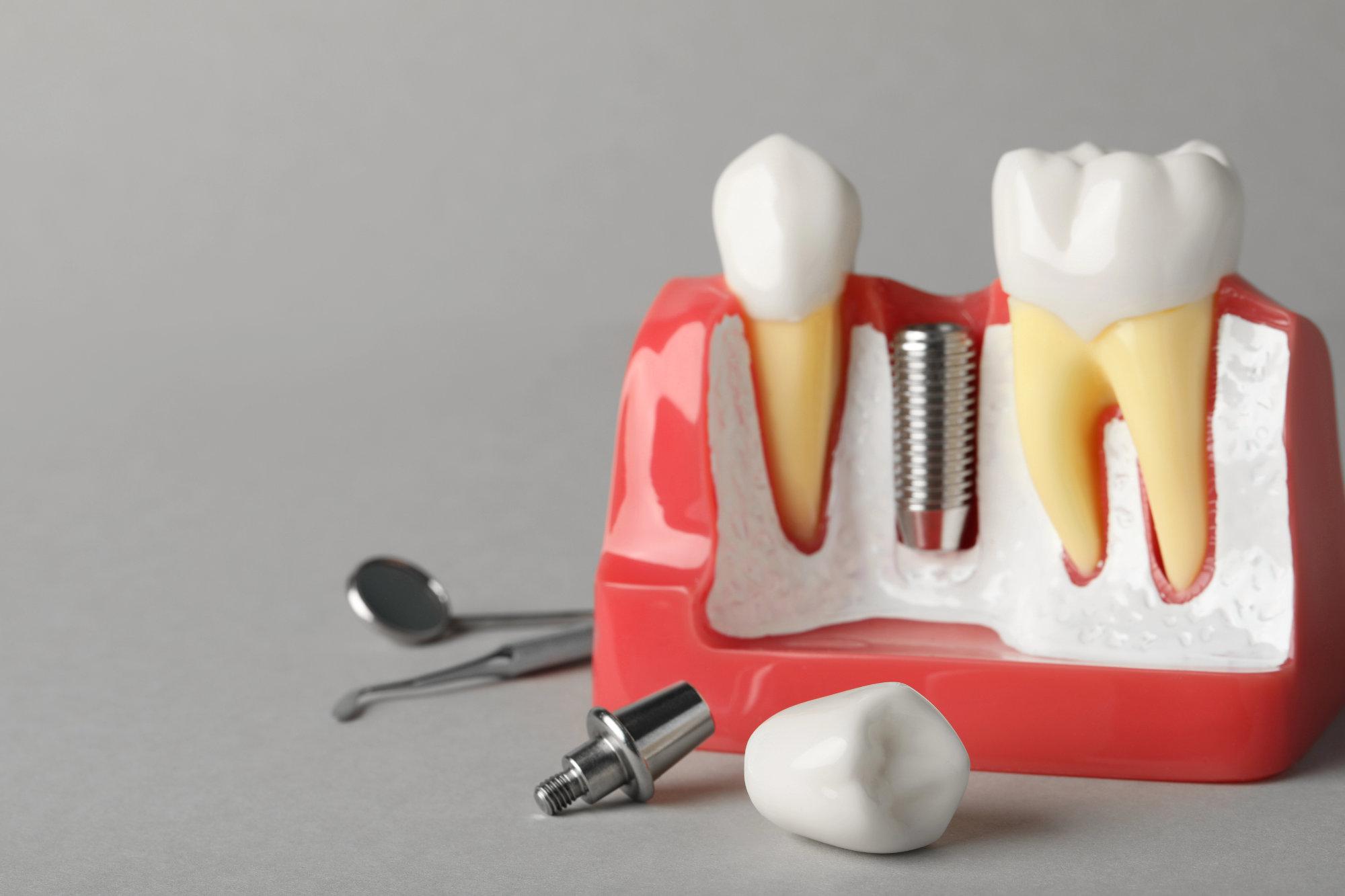
When patients begin researching tooth replacement options, most have the same goal: to replace the missing tooth with something that looks and feels permanent. The underlying assumption is that dental implants are a standardized commodity, i.e. that the process of replacing a molar is identical to the process of replacing a central incisor.
In practice, however, the planning and execution of dental implants changes significantly depending on where the tooth is located in the arch. The clinical objectives, the structural requirements, and the final aesthetic expectations are entirely different for the smile zone compared to the back of the mouth:
Front tooth implants primarily focus on appearance and extreme precision, while back tooth implants focus more on strength, heavy load distribution, and long-term mechanical function.
It’s important to know the difference if you’re considering dental implants, because it will dictate everything from the timeline of your treatment to the specific surgical techniques your provider will use. Here’s everything you need to know:
Also Read: Unraveling the Science: How Do Dental Implants Stay in Place?
Why Implant Location Changes Everything
The human mouth is a complex mechanical system where different teeth serve distinct roles. Your front teeth, the incisors and canines, are designed for cutting and tearing food, but they also serve as the cornerstone of facial identity and speech.
Conversely, your back teeth, the premolars and molars, are the proverbial workhorses of the mouth, designed to grind down food through immense repetitive pressure.
Because the roles of these teeth diverge so sharply, the goal of treatment shifts accordingly. When we discuss dental implants in Woodland Hills, the conversation for a front tooth usually centers on how it will blend with the natural smile. The top consideration for a back tooth is how it will withstand bite force over the next 20 years.
Front Tooth Implants: Aesthetics Drive the Plan
In cosmetic dentistry, the front teeth are referred to as being in the aesthetic zone. Replacing a tooth here is one of the most challenging tasks in implant dentistry because the margin for error is nearly zero. It is not simply about placing a white crown on a titanium post but about managing the surrounding soft tissue.
What patients often notice is that the success of a front tooth implant is measured by the gum line. If the gum tissue (the gingiva) does not drape perfectly over the implant, or if the papilla (the small triangle of gum between teeth) is lost, the result looks artificial.
To achieve symmetry with the adjacent natural teeth, the dental implant surgeon must account for the depth and shade of the porcelain, as well as the underlying metal or zirconia abutment, to prevent an unsightly greyish shadow from appearing through the gums.
Why Precision Matters More in the Front
Precision in the anterior region involves complex three-dimensional angulation. The bone in the front of the jaw is naturally thinner and slopes at a specific angle. If the dental implant is placed even a millimeter too far forward, it can lead to bone recession and gum loss over time.
Where the approach tends to change in the front is in the use of temporary restorations. In practice, patients receiving a front-tooth implant often require a custom healing abutment or a temporary crown to train the gum tissue into a natural shape while the implant heals.
This step is rarely needed for a back tooth but is essential for an aesthetic front-facing result. Even slight misalignment in this area significantly affects the appearance, potentially throwing off the entire symmetry of the face.
Back Tooth Implants: Function Is the Priority
When we move toward back teeth implants, the focus shifts from the mirror to the mechanics. The molars bear the brunt of the occlusal load, which is the force generated when you clench your jaw or chew. Depending on the individual, this force can exceed 200 pounds of pressure per square inch.
In practice, these implants must be designed for durability and long-term wear. While a front tooth implant is usually thinner to fit into a narrow bone, a back tooth implant is often wider to provide a larger surface area for osseointegration, the process by which bone fuses to the metal. This wider base helps distribute chewing pressure more effectively, protecting the surrounding bone from stress-related loss.
Also Read: A Guide to Implant-Supported Bridges
Structural Differences in Bone and Placement
The anatomy of the jaw itself dictates different surgical approaches. The front of the jaw usually has thinner bone, which often necessitates delicate placement or bone grafting to create a stable foundation that also looks natural.
In the back of the mouth, the bone is generally denser, but surgeons must navigate different anatomical landmarks. In the upper back jaw, the maxillary sinuses are often very close to the roots of the teeth.
If there has been bone loss, a sinus lift may be required to create enough vertical space for the implant. In the lower back jaw, the inferior alveolar nerve, which provides sensation to the lip and chin, must be carefully mapped and avoided.
Where this becomes more important is in the pre-surgical imaging; 3D CT scans are non-negotiable for back teeth to verify that the implant provides functional stability without interfering with these vital structures.
Healing and Integration Differences
While both front and back implants require several months for the bone to fuse to the titanium post, the patient’s experience during this time varies.
Visibility affects front tooth expectations heavily. Most patients are unwilling to go several months with a visible gap in their smile. Consequently, oral surgery for front teeth often incorporates flipper partials, Essix retainers, or temporary bridges to maintain appearance during the healing phase.
Back teeth, being less visible, allow for a more straightforward healing process. However, load timing is a critical factor for molars. Because they handle so much pressure, it is common to wait longer before placing the final crown on a back implant to make certain the integration is 100% complete. Prematurely loading a back implant with the force of heavy chewing is a leading cause of early implant failure.
What Patients Often Don’t Expect
There are several nuances to the location of a missing tooth that often surprise patients during the consultation phase:
For front teeth:
Patients often don't expect the number of shading appointments or minor gum adjustments required. Achieving a perfect match with a single natural front tooth is significantly harder than replacing an entire row of teeth.
For back teeth:
Patients are often surprised that the crown for a back implant might feel slightly different in the bite than a natural tooth. Because implants lack the periodontal ligament (a tiny cushion between a natural tooth and the bone), they do not have the same "give" as natural teeth, which changes how you perceive the pressure of your bite.
Also Read: How to Manage Post-Procedure Swelling and...
Expert Dental Implants in Woodland Hills
Dental implants are not a one-size-fits-all solution, as the location of the missing tooth affects the surgical roadmap, aesthetic requirements, and functional expectations. Remember that front teeth require a focus on precision and beauty, while back teeth require a focus on structural integrity and load-bearing.
Whether you want dental implants for aesthetic front teeth or are looking to restore your ability to chew with a solid molar replacement, recognizing these differences leads to better long-term outcomes and a restoration that truly fits your life.
Are you ready to restore your smile? Book an implant consultation to discover the best approach for your dental implants.