 >
>

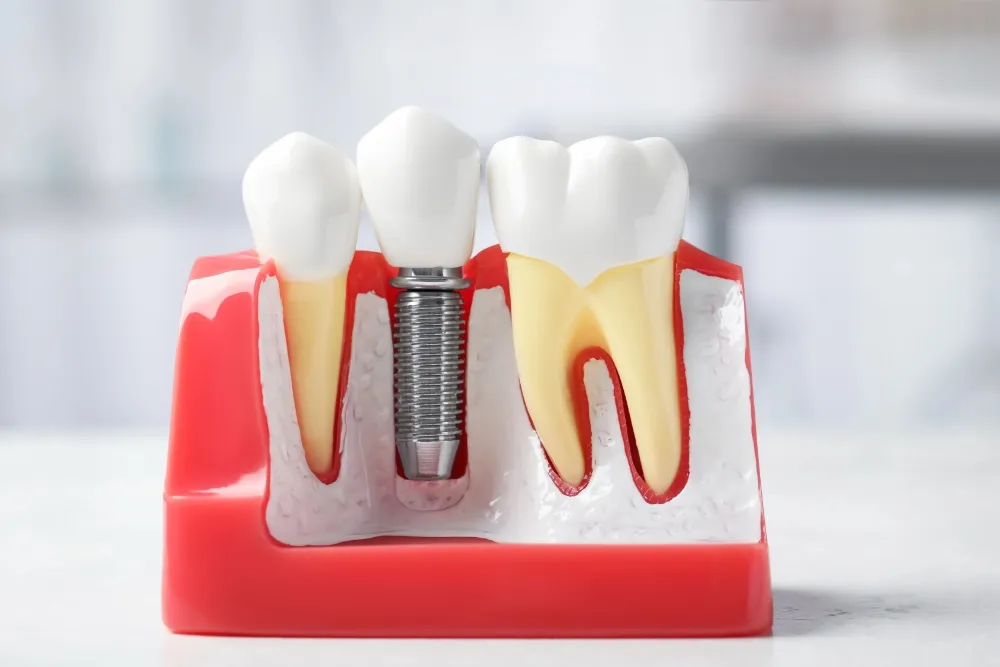
Searching "dental implants near me" is usually the first step for someone who has been hiding a gap in their smile or struggling with a partial denture that never quite feels secure. It is tempting to book with whichever practice shows up first, but choosing the right implant doctor takes more than proximity. Patients who ask the right questions before booking, about technology, surgical experience, and total treatment costs, tend to feel far more confident walking into their consultation.
Why Searching "Dental Implants Near Me" Requires More Than Just Proximity
Proximity alone does not determine whether a practice is the right fit for implant treatment. Diagnostic planning, surgical and restorative experience, bone and gum health, the complexity of the case, and long-term maintenance can all influence treatment and outcomes. Patients across the San Fernando Valley have many local options, but not every practice offers the same level of diagnostic detail or in-house experience.
Practices that combine detailed diagnostic imaging with surgical and restorative experience can coordinate multiple stages of implant treatment. That combination is worth asking about before scheduling a consultation.
Also Read: The Hidden Health Benefits of Dental Implants Beyond Your Smile
Question 1: What Technology Do You Use to Plan My Implant Procedure?
For many implant cases, 3D Cone Beam Computed Tomography (CBCT) provides valuable information beyond conventional dental X-rays. CBCT creates a three-dimensional view that can help the dentist evaluate available bone and important nearby anatomy when planning implant placement.
This additional anatomical information can help the dentist plan implant position while accounting for structures such as nearby nerves and the maxillary sinus. What patients often overlook is that 2D X-rays simply cannot show depth, which makes it harder to plan implant placement with full confidence. Computer-guided planning built on 3D data can support precise preoperative planning and, when appropriate, guided implant placement.
Question 2: Will My Placement and Restoration Be Handled In-House?
Some practices place the implant post but refer patients elsewhere for the final crown, which means separate offices, separate billing, and a treatment timeline that depends on multiple schedules lining up. Others handle the entire process under one roof.
Having surgical and restorative care coordinated within one practice can be convenient for patients and may simplify communication and scheduling. In other cases, treatment may appropriately involve more than one dental specialist. What matters is that the providers coordinate the surgical and restorative phases of care.
Question 3: What Is Included in My Dental Implant Cost?
An implant estimate should explain which stages of treatment are included, such as implant placement, the abutment and final restoration, diagnostic imaging, and any preliminary procedures that may be needed, including extraction or bone grafting. Patients should also ask which services could result in additional costs before treatment begins.
Question 4: Do I Have Enough Bone Density, or Will I Need a Graft?
Jawbone naturally begins to resorb after a tooth is lost, since the bone no longer receives stimulation from a tooth root. Evaluating the available bone is an important part of implant planning because the dentist needs to determine whether there is adequate support for the proposed implant.
When bone grafting is needed, the graft typically requires time to heal and mature before implant placement, although in some cases grafting and implant placement can be performed during the same procedure. The timing depends on the location and extent of bone loss and the treatment plan.
Question 5: What Could Make Me a Poor Candidate for Dental Implants?
Not everyone is ready for implant placement immediately. Untreated gum disease, inadequate bone, smoking, poor oral hygiene, and certain health conditions can affect healing or influence whether implant treatment is appropriate. Some barriers can be addressed before treatment, such as treating active periodontal disease or rebuilding deficient bone with grafting when appropriate.
This is why candidacy should be evaluated individually. Your dentist will review your oral and overall health, available bone, treatment goals, and other factors before determining the appropriate next step.
Also Read: Can You Get Dental Implants with Bone Loss?
Question 6: What Dental Implant Options Match My Specific Tooth Loss?
Patients missing most or all teeth in an arch may be candidates for a full-arch implant-supported restoration. Depending on the patient's anatomy and treatment plan, this may include an All-on-4 treatment approach or another implant configuration.
Matching the right option to the specific pattern of tooth loss protects the surrounding healthy teeth from unnecessary strain. The appropriate option depends on the number and location of missing teeth, available bone, oral health, bite, and the patient's restorative goals.
Why Woodland Hills Patients Trust Woodland Hills Dental Care for Implant Restorations
Woodland Hills Dental Care uses 3D imaging to evaluate implant cases and develop individualized treatment plans based on each patient's oral health, available bone, and restorative needs. For patients who are candidates for guided implant placement, digital planning can also help the team determine the intended implant position before treatment begins.
For patients who prefer coordinated care, having implant planning, placement, and restoration available through the same practice can simplify scheduling and provide continuity throughout treatment. The team also reviews anticipated costs and treatment stages so patients understand the plan before moving forward. The goal is always the same: a stable, natural-looking restoration built on a foundation the dentist has already confirmed can support it.
Also Read: Dental Implants for Front Teeth vs. Back Teeth: What’s Different
Making a Confident, Informed Decision About Your Implant Treatment
Getting dental implants is a significant investment in both oral health and quality of life, and asking the right questions before booking can help you make a more informed treatment decision. Technology, in-house care, transparent pricing, and a proper bone evaluation are not extras. They can help patients understand how treatment will be planned, who will provide each stage of care, and what to expect financially and clinically.
If you have been searching for dental implants near Woodland Hills, the team at Woodland Hills Dental Care can evaluate your oral health, discuss appropriate imaging and treatment options, and help you understand what your individual implant treatment may involve.
Frequently Asked Questions (FAQs)
What should I look for in a dental implant dentist near me in Woodland Hills?
Look for a dentist who performs a thorough implant evaluation, explains the imaging and planning process, discusses who will handle each stage of treatment, and provides a clear estimate of anticipated costs.
How much do dental implants cost in Woodland Hills, CA?
Cost varies based on the number of implants, whether a bone graft is needed, and the type of restoration, so a detailed consultation is the only way to get an accurate quote.
Are dental implants painful during or after the procedure?
Local anesthesia is typically used to keep the treatment area numb during implant placement. Soreness, swelling, or tenderness can occur afterward, and the dental team will provide instructions for managing discomfort during recovery.
How long does the entire dental implant process take from start to finish?
Treatment can take anywhere from a few months to about a year, depending on whether healing time or a bone graft is required before the final restoration.
Does dental insurance cover dental implants at Woodland Hills Dental Care?
Coverage varies by plan, and some policies cover part of the procedure while others do not, so it is best to confirm details directly with your provider.
What factors affect dental implant success?
Dental implant outcomes can be influenced by available bone, gum health, oral hygiene, smoking, certain medical conditions, implant location, and long-term dental maintenance. Your dentist evaluates these factors when determining whether implant treatment is appropriate.
Can I get a dental implant immediately after a tooth extraction?
In some cases, yes, if there is enough healthy bone present. In other cases, the dentist may recommend waiting for the socket to heal or for a graft to integrate first.
What is the difference between a dental implant and a dental bridge?
An implant is anchored directly into the jawbone, while a bridge relies on the surrounding natural teeth for support.
Am I a good candidate for dental implants if I have bone loss?
Bone loss does not automatically rule out dental implants. Depending on the amount and location of bone loss, bone grafting or another treatment approach may be considered before or during implant placement.
What is 3D CBCT guided implant surgery, and why is it important?
CBCT creates a three-dimensional view of the jaw that can help the dentist evaluate available bone and nearby anatomy, including nerves and the maxillary sinus. This additional information can be valuable when planning implant position and determining whether guided placement is appropriate.
How long do dental implants last compared to traditional dentures?
Dental implants are designed as a long-term tooth-replacement option, but longevity varies based on oral hygiene, gum and bone health, smoking, bite forces, medical factors, and regular dental care. The implant itself and the restoration attached to it may also have different maintenance or replacement needs over time.
What is the difference between titanium and zirconia dental implants?
Titanium implants have a long track record and excellent durability, while zirconia implants offer a tooth-colored alternative that some patients prefer for aesthetic reasons.
Will my new dental implant look like my natural teeth?
Implant crowns are designed to closely match the color, shape, and proportions of the surrounding teeth. The final appearance depends on factors such as implant position, gum tissue, neighboring teeth, and the restorative plan.
What happens during a dental implant consultation in Woodland Hills?
An implant consultation typically includes an evaluation of your oral health, a review of your medical and dental history, appropriate diagnostic imaging, and a discussion of your tooth-replacement goals. When indicated, CBCT imaging can provide additional information about available bone and surrounding anatomy for treatment planning.
Can age or health conditions like diabetes affect dental implant success?
Age alone is rarely a barrier, but conditions like uncontrolled diabetes can affect healing, which is why a full health history review is part of every consultation.
What is bone grafting, and will I need it before getting an implant?
Bone grafting rebuilds areas of jawbone loss so there is enough structure to support an implant. Whether you need one depends on the amount and location of available bone, the planned implant position, and other findings from your clinical and imaging evaluation.
How do I care for my dental implants after surgery?
Implants are cared for much like natural teeth, with regular brushing, flossing, and dental checkups to monitor the surrounding bone and gum tissue.
What is the difference between full-arch dental implants and All-on-4?
Full-arch implant treatment replaces an entire arch of missing teeth using multiple implants to support a fixed or removable restoration. All-on-4 is one specific full-arch approach that uses four strategically positioned implants. The appropriate number and configuration of implants depend on the patient's anatomy and treatment needs.
What financing options are available for dental implants in Woodland Hills?
Financing options vary and are typically discussed in detail during your consultation, based on your specific treatment plan.
Why should I choose Woodland Hills Dental Care for my tooth replacement?
Woodland Hills Dental Care provides comprehensive implant treatment supported by advanced diagnostic technology, individualized treatment planning, and coordinated care. The team evaluates your oral health, available bone, and restorative needs to develop a treatment plan specific to your situation.