 >

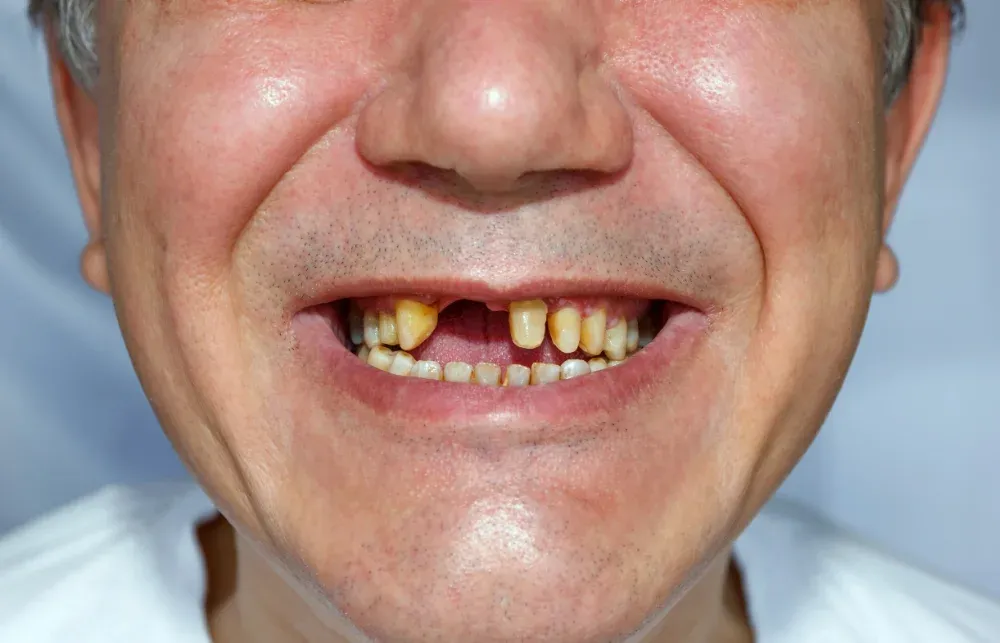
Missing most or all of your teeth can change how you eat, speak, and feel about your smile. You may avoid certain foods because chewing is difficult or find yourself worrying that your dentures will shift during a conversation. When dental problems have been building for years, finding a lasting solution becomes a priority.
At Woodland Hills Dental Care, we help patients explore All-on-X dental implants as an option for replacing an entire upper or lower arch of missing or severely damaged teeth. This approach uses multiple implants to support a fixed set of replacement teeth, providing a more stable alternative to conventional removable dentures.
Unlike a traditional denture, an All-on-X restoration is secured to implants placed in the jawbone. The number of implants varies depending on your bone structure, oral health, bite, and the type of restoration needed.
If you've been dealing with unstable dentures, failing dental bridges, or extensive tooth loss, understanding your treatment options can help you decide what comes next.
What Are All-on-X Dental Implants?
All-on-X refers to a full-arch dental restoration supported by a planned number of implants. The “X” represents the number of implants used, which may be four, five, six, or another number based on your treatment needs.
All-on-4 is one version of this approach, using four implants to support a complete arch. Other patients may need additional implants to provide adequate support for the final restoration.
The implants act as anchors for a fixed prosthesis that replaces the missing teeth in the upper or lower jaw. Unlike removable dentures, the restoration is designed to stay in place during everyday activities and is generally removed only by a dental professional for maintenance.
How Are All-on-X Implants Positioned?
Implant placement is carefully planned around the available jawbone, nearby nerves and sinus structures, and the forces the finished restoration will need to withstand.
Some treatment plans use angled implants toward the back of the jaw to make better use of available bone. Others use more vertically positioned implants or a combination of placement angles.
Angled placement may reduce the need for extensive bone grafting in selected patients, although it doesn't eliminate the possibility that grafting will be necessary.
The goal is to create a secure foundation for the replacement teeth while protecting the surrounding anatomy.
Can You Get Teeth the Same Day With All-on-X?
For some patients, All-on-X treatment makes it possible to receive fixed temporary teeth on the day of implant placement. This approach, known as immediate loading, is considered when the implants achieve sufficient initial stability and other clinical conditions are favorable.
The temporary restoration allows eligible patients to leave with fixed teeth while their implants heal. However, these are not the final prosthetic teeth, and patients must follow specific dietary restrictions to avoid placing excessive pressure on the implants.
Not everyone qualifies for same-day temporary teeth. Bone quality, implant stability, oral health, and the need for additional procedures all affect the treatment sequence.
Benefits of All-on-X Dental Implants
Greater Stability Than Conventional Dentures
Conventional dentures rest on the gums and may move during eating or speaking. All-on-X restorations are supported by implants anchored in the jawbone, offering greater stability.
This can make chewing and speaking more comfortable once healing is complete. The amount of function restored varies, and patients must follow dietary restrictions during the initial recovery period.
A Full Arch Without Replacing Every Tooth Individually
An entire arch of missing teeth doesn't require a separate implant for each tooth. All-on-X uses a carefully selected number of implants to support the complete restoration.
The appropriate number depends on your jawbone, bite, restoration design, and overall oral health. Four implants may be sufficient for some patients, while others benefit from additional support.
Support for the Jawbone
Jawbone changes occur naturally after tooth loss because the bone no longer receives the same stimulation from natural tooth roots.
Dental implants transfer functional forces to the surrounding bone, helping maintain bone in the areas where they are placed. Although implants cannot prevent every change associated with tooth loss or aging, they provide a different form of support than removable dentures.
Less Need for Bone Grafting in Selected Cases
Patients with reduced bone volume may still qualify for All-on-X treatment. Careful implant positioning can sometimes make use of the bone that remains, potentially reducing the need for extensive grafting.
Significant bone loss may still require grafting or another treatment approach. A detailed examination and appropriate imaging help determine what's possible.
Also Read: A Guide to Implant-Supported Bridges
Who Is a Candidate for All-on-X Dental Implants?
All-on-X may be an option if you're missing most or all of your teeth in one arch or have severely damaged teeth that cannot be predictably restored.
Patients often explore this treatment after years of struggling with failing bridges, extensive dental disease, or removable dentures that no longer fit comfortably.
However, having several damaged teeth doesn't automatically mean they should all be removed. Preserving healthy natural teeth remains important, and your dentist should first determine whether existing teeth can be maintained.
Can You Get All-on-X With Bone Loss?
Bone loss doesn't necessarily rule out treatment. Depending on the amount and location of remaining bone, implants may be positioned to make use of available support.
Some patients still need bone grafting, while others may require a different restoration approach.
Three-dimensional imaging helps evaluate bone volume, anatomy, and the placement options available.
How Does Your Health Affect Eligibility?
Your overall health plays an important role in implant healing. Uncontrolled diabetes, active oral infections, smoking, certain medications, and other medical factors may increase the risk of complications.
Your dentist will also consider gum health, bite forces, and your ability to maintain the restoration through daily cleaning and regular dental visits.
The All-on-X Dental Implant Process at Woodland Hills Dental Care
Step 1: Consultation and Treatment Planning
Your first appointment includes a review of your medical and dental history, remaining teeth, gums, bite, and jawbone.
Three-dimensional CBCT imaging may be used to evaluate bone anatomy and nearby structures, including nerves and sinus spaces. This information helps determine the appropriate implant positions and whether additional procedures are needed.
Your dentist will discuss the proposed restoration, treatment stages, and expected recovery before proceeding.
Step 2: Implant Placement and Temporary Teeth
During surgery, the planned implants are placed into the jawbone. Teeth that cannot be saved may be extracted as part of the treatment plan.
If the implants achieve sufficient stability and immediate loading is appropriate, a fixed temporary restoration may be attached soon after placement.
Otherwise, another temporary solution may be used while the implants heal.
Step 3: Healing and Osseointegration
Over the following months, the surrounding bone gradually heals and integrates with the implants through a process called osseointegration.
This commonly takes several months, although the timeline varies. Patients follow instructions about oral hygiene, food choices, and follow-up visits to protect the implants during healing.
Even when temporary fixed teeth are placed immediately, avoiding excessive biting forces remains important.
Step 4: Placement of the Final Restoration
Once the implants have integrated and the tissues are ready, the final full-arch restoration is fabricated and attached.
Your dentist evaluates its fit, appearance, bite, and accessibility for cleaning. Follow-up care helps maintain the restoration and monitor the health of the surrounding tissues.
Also Read: Can You Get Dental Implants With Bone Loss?
What Are the Risks of All-on-X Dental Implants?
All-on-X involves oral surgery, and complications are possible. These include infection, bleeding, delayed healing, implant failure, and injury to nearby nerves or other anatomical structures. Upper-jaw procedures may also involve sinus-related risks.
Problems can develop after healing as well. Components may loosen, prosthetic teeth may wear or fracture, and inflammation around the implants can affect their long-term stability.
Daily cleaning and professional maintenance are essential. Your dentist will explain the risks relevant to your oral health and treatment plan before surgery.
Why Choose Woodland Hills Dental Care for All-on-X Dental Implants?
Replacing an entire arch of teeth involves more than placing dental implants. The final restoration must fit comfortably, support your bite, look natural, and allow you to maintain healthy surrounding tissues.
At Woodland Hills Dental Care, we evaluate your remaining teeth, jawbone, oral health, and treatment goals before recommending a full-arch restoration. We want you to understand the options available, including whether preserving some natural teeth is possible.
Our Woodland Hills office welcomes patients from Tarzana, West Hills, and surrounding San Fernando Valley communities who are considering implant-supported tooth replacement.
Learn more about our dental implant services in Woodland Hills and the treatment options available at our practice.
Frequently Asked Questions About All-on-X Dental Implants
What is the difference between All-on-X and All-on-4 dental implants?
All-on-X describes a full-arch restoration supported by a planned number of implants. All-on-4 is a specific configuration that uses four implants per arch. Other All-on-X treatment plans may use five, six, or more implants.
How many implants are needed for All-on-X?
The number varies. Some patients can support a full arch with four implants, while others benefit from additional implants. Your dentist considers bone anatomy, bite forces, oral health, and restoration design when developing your treatment plan.
Can All-on-X implants replace all my upper and lower teeth?
Yes. All-on-X can restore the upper arch, lower arch, or both. Each arch requires its own evaluation, and your dentist will determine whether any remaining natural teeth can be preserved.
Can I get All-on-X implants if I have bone loss?
Possibly. Some patients with reduced bone volume can receive implants through careful positioning, while others require grafting or another treatment approach. Imaging and a clinical examination help determine eligibility.
Can I get permanent teeth in one day with All-on-X?
Some patients qualify for fixed temporary teeth on the day of implant placement. The final restoration is generally completed after the implants have healed and integrated with the jawbone. Same-day temporary teeth aren't appropriate for every patient.
How long do All-on-X dental implants last?
Dental implants are intended to provide long-term support, but their lifespan varies. Oral hygiene, smoking, bite forces, medical conditions, and routine maintenance influence outcomes. The attached restoration may require repairs or replacement over time.
How do I clean All-on-X dental implants?
You'll need to brush the restoration and clean around the implants and beneath the prosthesis using tools recommended by your dental team. Regular professional examinations and maintenance are also necessary to monitor the implants and surrounding tissues.
Is All-on-X better than removable dentures?
All-on-X generally provides greater stability because the restoration is secured to implants. However, surgery, cost, healing requirements, and long-term maintenance mean it may not be the best option for every patient.
Also Read: Why Did My Dentist Recommend a Dental Implant Instead of a Crown?
Schedule an All-on-X Dental Implant Consultation in Woodland Hills
If missing teeth, failing dental work, or uncomfortable dentures are affecting your daily life, All-on-X may offer a more stable way to restore your smile.
At Woodland Hills Dental Care, we'll examine your teeth and jawbone, discuss your treatment options, and explain whether an implant-supported full-arch restoration makes sense for your needs.
Schedule a consultation with Woodland Hills Dental Care to learn more about All-on-X dental implants and discuss the next steps in your treatment plan.
Disclaimer: This article provides general educational information and does not replace individualized dental advice. All-on-X candidacy, treatment requirements, healing, and outcomes vary. A licensed dentist must perform a clinical evaluation before recommending treatment.